Friday, April 25, 2014


The Use of Nitrous Oxide in the Dental Office

Dental appointments can be scary at any age, often times they prove to be especially frightening for children. In a picture-perfect world, every child would look forward to their dental appointments, but unfortunately, we do not live in an idealistic world where all children are eager to visit the dentist. In fact, often times children experience anxiety and are fearful or worried before a dental appointment. Dr. Matt understands that your child may not share our team’s enthusiasm for their oral health. The good news is, we now offer nitrous oxide sedation which aids in relieving any anxiety your child may experience. Thus making his/her dental visits less stressful for both you and your child.

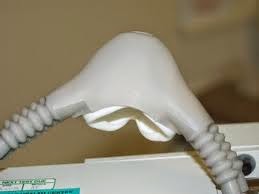
Nitrous oxide is a type of dental analgesia used by dentists across the country to alleviate anxiety associated with dental procedures.  Also known as ‘laughing gas,’ nitrous oxide is highly effective for giving children a sense of comfort and/or happiness during their dental experience. Nitrous oxide is a colorless gas that has a sweet scent. It is administered by inhalation through the nose.. With informed consent from a patient’s parent(s), Dr. Matt will administer and manage nitrous oxide throughout your child’s dental procedure, if indicated. While breathing nitrous oxide, the patient responds normally to verbal commands, all vital signs are stable, there is no significant risk of losing protective reflexes, and the patient is able to return to pre-procedure mobility. Pictured below is an example of a nosepiece that would be used to administer nitrous oxide.
 
 
Nitrous oxide sedation isn’t only for anxious children. In fact, nitrous oxide is an excellent option for children whose fear or anxiety would otherwise prevent them from receiving dental care. It is also appropriate for many other reasons, too. For example, a child who has a sensitive gag reflex may feel physically uncomfortable during a necessary dental procedure. In this case, nitrous oxide would likely be indicated to aid in the completion of treatment.  Nitrous oxide sedation would also likely be indicated for children who have emotional or behavioral disorders that make it nearly impossible to remain still in the dental chair throughout their dental visit. Additionally, children with certain health conditions or special needs can also benefit from nitrous oxide sedation.
 
In accordance with the American Academy of Pediatric Dentistry (AAPD) the objectives of nitrous oxide inhalation include:
• reduce or eliminate anxiety;
• reduce untoward movement and reaction to dental treatment;
• enhance communication and patient cooperation;
• raise the pain reaction threshold;
• increase tolerance for longer appointments;
• aid in treatment of the mentally/physically disabled or medically compromised patient;
• reduce gagging;
• potentiate the effect of sedatives
Although some parents are reluctant to request sedatives for their children, Dr. Matt advises that neglecting oral health could have serious consequences later. Without treatment, something as simple as a cavity could cause your child to develop an infection (abscess), thus becoming quite severe and very painful. The AAPD formally recognizes nitrous oxide sedation as a safe means of administering analgesia to children. It relaxes the central nervous system while causing little effect on respiratory patterns. In fact, the AAPD actually recommends nitrous oxide for reducing dental anxiety in pediatric patients. http://www.aapd.org/media/Policies_Guidelines/G_Nitrous.pdf
 
Whether your child has special needs, is afraid of the dentist or is simply too active to sit still through dental treatment, nitrous oxide sedation can act as a helpful tool for pediatric dental patients. Therefore giving Dr. Matt and the Southern Indiana Pediatric Dental team an even bigger opportunity to provide quality dental care, in a fun and inviting atmosphere. Dentistry shouldn’t be frightening! To learn more about nitrous oxide sedation dentistry, other forms of sedation dentistry, or to schedule an appointment with Dr. Matt, contact us at 812-333-KIDS (5437). We welcome new patients of all ages, and look forward to providing an enjoyable, and comfortable dental experience for you and your child.
 

Saturday, February 15, 2014

National Children's Dental Health Month


February is National Children’s Dental Health Month, sponsored by the American Dental Association (ADA). Each February, the ADA helps to raise awareness about the importance of oral health by focusing on important information every parent and caregiver should know. This year’s slogan, “Join the Super Smile Team!” helps parents teach their children how to maintain a healthy smile by focusing on ; “2min2x” brush for two minutes, two times a day, floss once each day, and limit sugary snacks between meals. Below is the “Super Smile Story” and poster, as seen on the ADA website. Visit www.ADA.org/ndchm for more fun ideas on how to keep your child’s smile healthy. And as always, feel free to call our office (333-kids) with any questions or concerns you may have regarding your child’s overall oral health.


The Super Smile Team!

Meet K-9! He’s a frisky pup who cares as much about good oral health as his buddies Flossy and Buck McGrinn, and Den and Gen Smiley.

One day the whole gang decided to play super heroes. They put on capes, made costumes, struck super hero poses and became The Super Smile Team! Even K-9 got in on the act!

Of course, every super hero needs a mission. The Super Smile Team’s quest? To fight for good oral health by following this simple rule, “2min2x.” That’s code for “brush your teeth two minutes, two times a day.”

Flossy, Buck, Den, and Gen know the importance of good dental habits to keep their super smiles bright. They brush their teeth when they get up in the morning and again before they go to bed at night. They also floss their teeth once each day. Because Den wears braces, he is especially careful about keeping his teeth healthy so he has a sparkly smile when the braces come off.

Being super heroes takes a lot of energy so the McGrinns and Smileys do eat snacks between meals but very few sugary ones. They usually stick to fruit and other healthy foods, and they choose water when they are thirsty instead of soda pop.

Want to be a part of The Super Smile Team? Join in the fun by playing the games and doing the activities to learn how to take good care of your teeth.

And remember the code“2min2x”! For a super smile and healthy mouth, brush your teeth two minutes, two times a day.

(Games and activities can be found on the American Dental Association’s web site at ADA.org/ndchm)


Thursday, December 12, 2013

Mouth Guards


Mouth Guards

A mouth guard is a protective device for the mouth that covers the teeth and sometimes the gums. Mouth guards are often used to protect the teeth from injury during sports, and from teeth grinding.

When a child participates in a sporting or recreational activity, injuries can occur. A mouth guard is an important piece of protective equipment. Coaches and team members know that mouth guards help to cushion the blow that would otherwise cause injury to the teeth, lips, face, and sometimes even jaw fractures.

Another reason a child would need to wear a mouth guard is if he or she suffered from what is known as bruxism. Bruxism is the medical term for clinching of the jaw or grinding of the teeth. Most of the time, bruxism occurs while a child is sleeping or when he or she is under stress. Bruxism is common among children, but most will outgrow it. Wearing a mouth guard (night guard) can help to minimize the effects of bruxism.


There are three different types of mouth guards:

1.)    Stock mouth protectors are preformed and come ready to wear. They are inexpensive and can be found at most drug stores or sporting goods stores. Not much can be done to adjust their fit, and some say they are bulky.
 
Stock mouth protector


2.)     Boil and bite mouth protectors can also be bought at most drug stores or sporting goods stores. This type of mouth guard may offer a better fit than stock mouth protectors. The boil and bite mouth protector is made to be placed in hot water to soften, then placed in the mouth to be shaped around the teeth, gums and lips using tongue and finger pressure.


Boil and bite mouth protector


3.)    Custom fitted mouth protectors are made in a dental laboratory to specifically fit an individual’s mouth.  The first step in this process is for a dental office to take an impression of the individual’s mouth/teeth. Next a model is made, and a mouth guard is molded over the model using special material. Often times, the custom fitted mouth protector provides the most comfort and protection.  

 
Custom fit mouth protector


If you have any questions about mouth guards or their uses, please contact our office at 333-kids.


Wednesday, November 13, 2013


Dental Sealants

Dental Sealants

Dental sealants are placed to prevent tooth decay. A dental sealant is a thin material that is painted on the chewing surfaces of the permanent molars and premolars (back teeth), where decay occurs most often.  The sealant quickly bonds into the pits and fissures (depressions and grooves) of the teeth, forming a protective shield over the enamel of each tooth.


Pits and fissures are often times difficult to keep clean because a toothbrush bristle cannot reach into them. The sealant acting as a protective shield over pits and fissures helps keep the plaque and food out, thus decreasing the chances of decay.


Placing a dental sealant is quick, and there is no discomfort. First, the dentist or assistant conditions the chewing surface to help the sealant adhere to the tooth. Next they apply the sealant to the enamel. As long as the sealant remains intact, it will help protect the tooth from decay. Sealants normally hold up well and can last for years.

Tuesday, June 4, 2013

Flossing & Fluoride in Children


Flossing & Fluoride in Children

Why Floss?
Flossing removes plaque between teeth in areas where a toothbrush can’t reach.  Flossing once a day is an important part of overall oral hygiene.  As soon as a child’s teeth start to touch, it’s time to start flossing.  Due to the skill required, parents often need to assist or supervise a child’s flossing. 

Flossing technique
Conventional flossing requires a length of approximately 18 inches.  The floss is wound around the middle fingers of both hands.  The index and middle fingers can then be used to guide the floss between teeth.  The floss is curved into a C-shape and slid against the sides of each tooth.


Another flossing option is available using Plackers™.  By offering an easy grasp handle, Plackers can serve as a great way for younger kids to develop flossing habits on their own.  The floss is guided between the teeth’s contacts as with the conventional method.  At cleaning visits we demonstrate the different flossing techniques first hand.  A Plackers pack is also given to kids to use at home.      


Fluoride
Fluoride is a mineral found naturally in water sources.  Fluoride in its topical form can prevent cavities as well as repair the early stages of tooth decay.  Fluoride works by strengthening enamel and making it more resistant to the acid that causes tooth decay.  Fluoride is an ingredient in most toothpastes, some mouth rinses, and in the protective varnish applied at the dental office. 


The next blog will discuss dental sealants and mouth protectors.  Please contact our office with any questions and for your free infant dental kit.  We are located in Bloomington near the College Mall, next to Goodwill. 

-Dr. Matt

Matthew L. Rasche, DDS, MSD
Board Certified Specialist in Pediatric Dentistry
Southern Indiana Pediatric Dentistry
(812) 333-KIDS (5437)

Tuesday, January 22, 2013


Diets & Toothbrushing for Children

Optimal Diets for Infants
Healthy nutrition for kids starts early.  In accordance with the American Academy of Pediatrics (AAP) guidelines, breastfeeding exclusively for the first 6 months of life has been shown to have many beneficial effects for children.  The AAP recommendation is for continued breastfeeding as complementary foods are introduced for 1 yr or longer as mutually desired by mother and infant.  http://pediatrics.aappublications.org/content/129/3/e827.full#content-block
                     
Optimal Diets for Preschoolers and Beyond
It’s important to help establish good eating habits early for kids.  Eating a variety of foods from the five major food groups is a great way to ensure optimal nutrition:

1) Fruits
2) Vegetables
3) Grains, breads, cereals
4) Milk, cheese, yogurt
5) Meat, poultry, fish and/or alternatives such as beans, peas, and nuts


 Toothbrushing for Infants & Children
Oral hygiene starts as early as a child is born.  Even before teeth are present, it is beneficial to wipe a child’s gums with a wet washcloth after every feeding.  As teeth erupt it is best to switch to a soft bristle toothbrush.  Brushing or wiping a child’s teeth before naps and bedtime is especially important.   

Parents will likely need to assist children with brushing and flossing till children are 6+ years old.  One approach is to allow children the opportunity to brush their teeth first.  A parent can then do a thorough follow-up brushing.  Establishing brushing habits early can lead to a lifetime of healthy teeth and gums.

Using an appropriate child-sized toothbrush can improve toothbrushing success.  There are many toothbrush colors and styles available.  As the old dental adage goes, “the best toothbrush is the one that will be used” J

When assisting children with brushing, it may be beneficial to stand behind the child.  Optimal brushing technique removes the tooth film (plaque) from inner, outer, and chewing surfaces of teeth.  Brushing the tongue can also be used to improve a child’s breath.


The next blog will discuss flossing and fluoride.  Please contact our office with any questions and for your free infant dental kit.  We are located in Bloomington near the College Mall, next to Goodwill. 

-Dr. Matt

Matthew L. Rasche  DDS, MSD
Certified, American Board of Pediatric Dentistry
Southern Indiana Pediatric Dentistry
(812) 333-KIDS (5437)

Monday, December 3, 2012


Decay in Primary (Baby) Teeth
Tooth decay can occur as soon as teeth appear in the mouth.  
Frequent and prolonged exposure of a child’s teeth to fruit juices, milk, and formula can contribute to kids getting early cavities.  When a baby is put to sleep with a bottle containing juice or milk the child is much more likely to get early cavities (baby bottle tooth decay). 

Preventing Decay in Primary (Baby) Teeth
Never put a baby to bed with a bottle containing anything other than water. 
Switch from a bottle to a cup by one year of age.   
The ideal situation is to limit the use of a training cup (sippy cup).  The best approach is to switch to a regular cup as soon as possible. 

Finger & Thumb Sucking Habits
Finger and thumb sucking is a normal reflex of infants and young children to bring a sense of security and relaxation.  The frequency, duration, and intensity of sucking will determine the degree of possible dental problems.  The optimal time to stop any sucking habits is by three years of age. 

Helping a Child Stop Sucking
Focus on praising children when they are not sucking fingers or thumbs
Provide comfort to children to eliminate anxiety.  Anxiety may contribute to sucking habits
Reward children who refrain from sucking
Talk with your dentist regarding additional therapies or treatment that may benefit your child 


The next blog will discuss proper diets and cover toothbrushing techniques for children.  Please contact our office with any questions and for your free infant dental kit.  We are located in Bloomington near the College Mall, next to Goodwill. 

-Dr. Matt

Matthew L. Rasche  DDS, MSD
 Certified, American Board of Pediatric Dentistry
Southern Indiana Pediatric Dentistry
(812) 333-KIDS (5437)